
Getting more leads isn’t always about spending more on marketing. You can have a great website, run ads, and stay active on social media, yet still struggle to turn visitors into phone calls.
That is not an effort problem. Most HVAC contractors put real work into their marketing. The problem is direction. Spreading the budget across too many channels without tracking what brings in booked jobs produces the same result every time; activity without revenue.
Check out HVAC marketing strategies that generate consistent leads, which channels work best, and how Zenix Leads delivers exclusive live calls from customers ready to book today.
Why Most HVAC Marketing Produces Inconsistent Results
HVAC demand is urgent. A homeowner whose air conditioning stops working in July is not comparing options. They are calling whoever answers first.
That changes what your HVAC marketing strategies need to do. It does not need to build awareness over several weeks. It needs to reach a customer at the exact moment they need help. Most approaches miss that window entirely.
Why HVAC marketing strategies fails to deliver consistent volume:
- Too much is spent on brand visibility and not enough on capturing demand that already exists
- Shared leads are sold to multiple contractors before anyone picks up the phone
- Slow callback systems that let high-intent calls go cold within minutes
- No tracking, so the budget keeps going to channels that do not produce booked jobs
Fixing those 4 things is where consistent leads start.
The Marketing Channels That Drive Real HVAC Leads
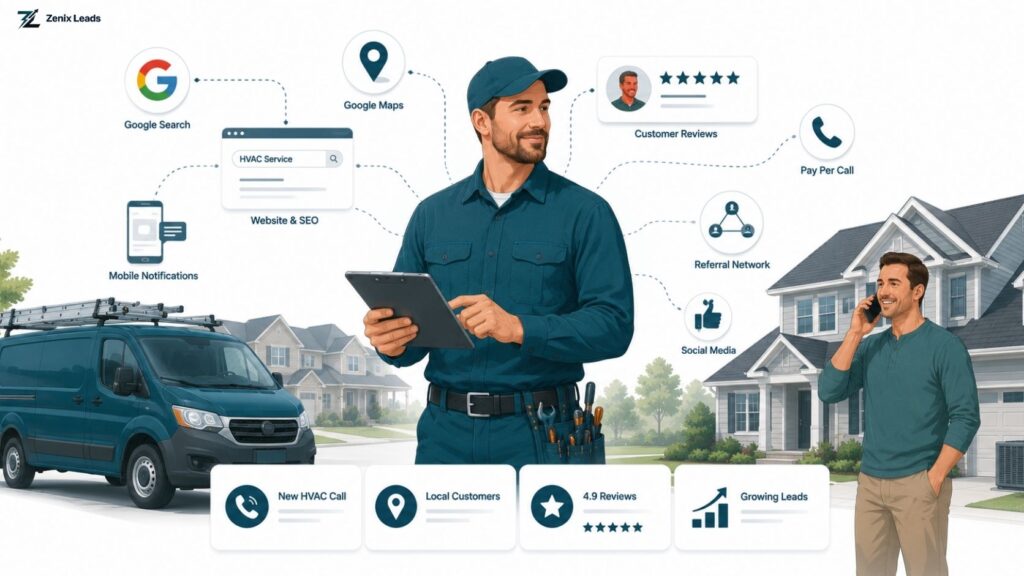
No single marketing channel keeps an HVAC company busy all year. Some bring work fast. Others take months before they produce steady results. If you want consistent jobs, you need a mix instead of putting your budget into one place.
Google Local Services Ads
When someone searches for an HVAC company, Google Local Services Ads usually appear before everything else. They show your business name, reviews, and phone number at the top of the page.
Successful HVAC marketing strategies combine several channels instead of relying on just one source of leads.. Google also checks each business before listing it, which gives homeowners more confidence when they compare contractors. Many people who click these ads already know they need a repair or replacement. They are looking for a company they can call today.
Google Search Ads
Search Ads appear below the Local Services listings. They work best when you focus on services instead of broad industry terms.
For example, “HVAC” attracts all kinds of searches. “Emergency AC repair Dallas” attracts someone with a broken air conditioner. Those searches usually produce better calls because the customer already knows what they need.
Local SEO and Google Business Profile
Many HVAC jobs come from Google’s map results. If your company appears there, people can see your reviews, business hours, phone number, and service area before they visit your website.
Keep your profile updated. Ask customers for reviews after every completed job. Make sure your business information matches across online directories. Small details like these make it easier for Google to trust your listing.
Pay Per Call Lead Generation
Clicks do not pay the bills. Phone calls do. Traditional online advertising charges you for traffic first. After that, you still have to hope the visitor calls or fills out a form.
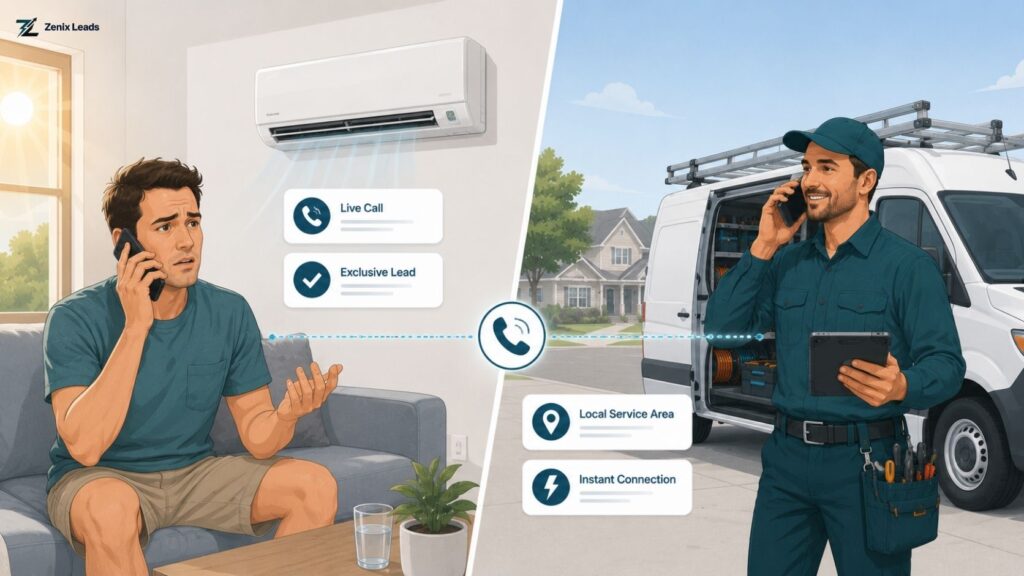
Pay per call skips those extra steps. The customer calls your business directly after searching for HVAC service. You answer the phone and speak with someone who needs help now. You are not sorting through old form submissions or competing with several contractors for the same lead.
Zenix Leads sends exclusive calls to HVAC contractors through a pay-per-call model. Calls come from the cities and ZIP codes you choose. You pay only for qualified calls that match your campaign requirements. There are no upfront advertising costs, and you are not billed for calls outside your target criteria.
How to Qualify HVAC Leads Fast
Not every caller becomes a customer. Before you promise a service window, ask a few questions. You will know right away if the job fits your business or if your team should move on.
Most HVAC companies keep the conversation around five points.
Budget: Has the customer talked about cost? If the repair turns into a replacement, would financing be an option?
Authority: Find out who makes the decision. If the homeowner is not on the call, the estimate could stall before it goes anywhere.
Need: Ask what happened. A unit that quit working this morning is different from someone asking about replacing an aging system next month.
Timeline: Some people want a technician today. Others are comparing quotes before making a choice. Knowing the difference helps you schedule the job.
Location: Confirm the address before booking anything. If the property falls outside your service area, you should avoid sending a technician to an area where you do not normally work.
These questions take only a few minutes, but they can prevent a lot of wasted time. Your technicians spend more time on paying jobs instead of driving to appointments that never had a real chance.
One last point deserves attention. Do not let calls sit. When the AC stops working in the middle of summer, most homeowners start calling contractors one after another. The first company to answer often gets the appointment. The second one hears, “We already found someone.”
A Simple Follow-Up System That Does Not Drop Calls
After the initial call, many HVAC jobs are lost. A homeowner leaves a message and waits for a response, and then begins calling other contractors. They have already filled the next time slot by the time you call back.
A simple three-step follow-up system stops that from happening.
Touch 1: Respond within 5 minutes.
Be sure to contact the customer the moment you spot the inquiry. If they still don’t respond, write them a brief text. Tell them you got the message and you will make an effort to reach them again. A rapid response is an indication that your business is listening.
Touch 2: Follow up within 24 hours.
Don’t think that the customer has lost interest, as they did not pick up on one call. Contact again in 24 hours. If you call for the first time, then text them. If they completed a form or emailed, grab the phone. A unique plan will get a response.
Touch 3: Send a short message on Day 3.
If not yet connected after a few days, send one last message. Keep it short. Explain an open appointment, seasonal HVAC service, and/or ask if they need help. Leave the next step up to the customer.
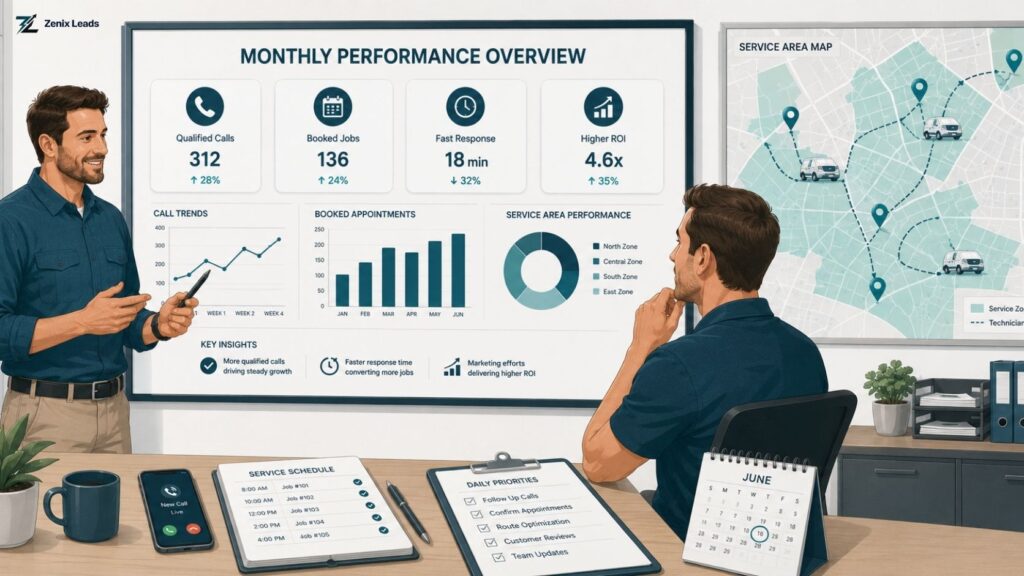
Even the best HVAC marketing strategies fail if you never measure performance. Tracking the right metrics helps you identify which campaigns generate profitable jobs and which ones waste your budget.
What to Track Every Month
Running HVAC marketing without tracking is expensive. These are the numbers worth reviewing every month.
|
Metric |
What It Tells You |
|
Cost Per Lead by Channel |
Which channels bring leads and at what price |
|
Lead to Booked Job Rate |
Which channels convert, not just generate calls |
|
Average Job Value by Source |
Where your best revenue actually comes from |
|
Response Time |
How fast your team picks up and calls back |
|
Call Answer Rate |
What percentage of inbound calls you are capturing |
When a channel produces leads but few booked jobs, either the lead quality is low or the follow-up system is breaking down. The data tells you which one it is.
Why Zenix Leads Works for HVAC Contractors
Many lead companies collect a customer’s information through an online form and send it to several HVAC contractors at the same time. Every contractor tries to make contact, but the homeowner hires the first company that answers the phone.
Zenix Leads takes a different approach. Instead of sending the same lead to multiple businesses, each qualified call goes to one contractor. The customer is already looking for HVAC service, so you speak with them while they are ready to book an appointment.
Campaigns focus on the cities and ZIP codes you choose. That means your office spends less time sorting through calls from areas you do not serve.
With Zenix Leads, you get:
- Exclusive calls that are not shared with other HVAC contractors
- Live calls from homeowners looking for HVAC service
- Coverage based on the cities and ZIP codes you select
- Billing only for qualified calls that meet your campaign requirements
- No upfront advertising costs
If you want to spend more time completing service calls and less time managing advertising, Zenix Leads’ pay-per-call program provides qualified inbound calls from homeowners who are ready to book.
Conclusion
The most effective HVAC marketing strategies focus on reaching customers when they are ready to book service. Track every call, invest in the channels that produce real jobs, and eliminate the ones that do not. Consistent measurement leads to consistent growth.
Keep track of where every phone call comes from. Compare booked jobs with your marketing costs. Drop the channels that do not produce results, and put more of your budget into the ones that do.
If you want a direct source of exclusive live inbound calls from customers ready to book HVAC service in your market, Zenix Leads is your solution.
For a free consultation or call +1-914-540-7261 to claim your market today.