


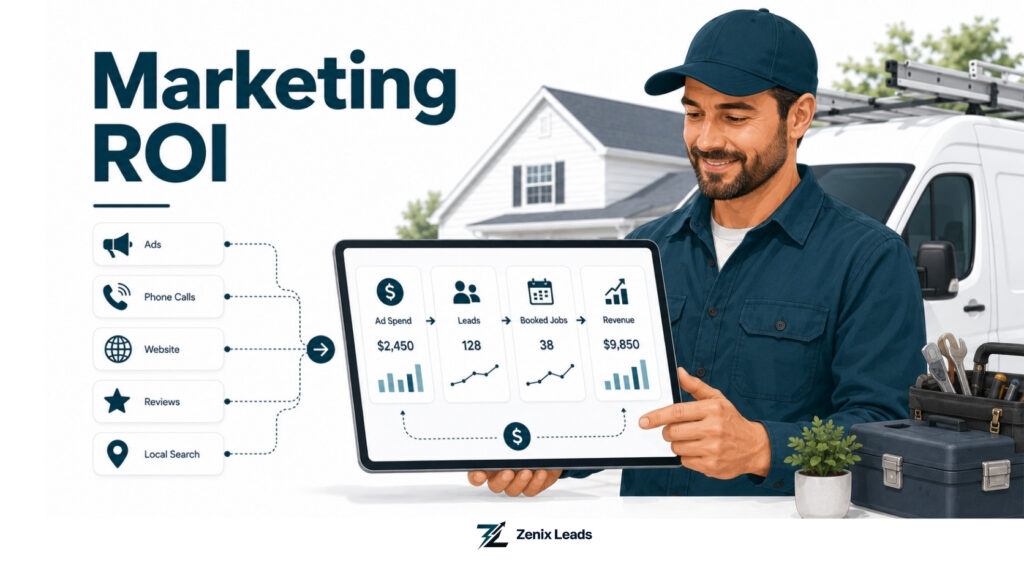
You are spending money on ads. You are posting on social media. You are running promotions and showing up in local searches. But do you actually know what is working? Marketing ROI for local service businesses is one of the most overlooked metrics in the trades.
Most contractors and home service owners have a rough sense of where their leads come from. But rough is not good enough when you are trying to grow with intention.
This guide walks you through how to measure advertising ROI for contractors in a practical and repeatable way. No complicated spreadsheets. No analytics degree required.
By the end you will know how to track marketing spend for your home service company and use that data to make better decisions every single month.
Why Marketing ROI for Local Service Businesses Is So Hard to Track
Local service businesses face a unique challenge. A customer might see your yard sign on Tuesday and call you three weeks later. They may find you on Google but decide to hire you after reading your Facebook reviews.
That journey from awareness to a booked job rarely follows a straight line. Most tracking tools only capture the last thing a customer clicked before they called. That creates blind spots in your data.
What makes accurate ROI measurement tricky for local businesses:
- Phone calls are not always tied back to a specific ad or campaign
- Customers often use multiple devices before making a decision
- Offline touchpoints like yard signs and referrals go untracked
- Seasonal demand makes month to month comparisons unreliable
- Job values vary so a single large job can skew your numbers
Start With the Right Numbers: What to Actually Measure
Before you can calculate ROI you need clean inputs. Most businesses track cost per lead but stop there. That is only part of the picture.
Here are the numbers worth tracking from the start:
Cost Per Lead by Channel
Divide your total spend on each channel by the number of leads it produced. This gives you a baseline to compare Google Ads against Facebook Ads against direct mail. This is the foundation of how to measure advertising ROI for contractors without overcomplicating things.
Lead to Job Conversion Rate
Not every lead becomes a booked job. Track what percentage of leads from each channel actually convert. A channel with cheap leads but a low conversion rate may be costing you more than you think.
Average Job Value by Lead Source
Some channels bring in small jobs. Others bring in larger projects. Knowing the average job value per source helps you understand where your best revenue actually comes from.
Customer Lifetime Value
A customer who books once and never returns is worth less than one who calls every year. Factor repeat business into your ROI calculations especially for maintenance based services.
How to Track Marketing Spend for a Home Service Company
To effectively track marketing spend for a company you need a system that connects spend to revenue. Here is a simple process that works even for small teams.
Use Call Tracking Numbers
Assign a unique phone number to each marketing channel. When a customer calls from your Google Ad they hit one number. Calls from your website hit another. This tells you exactly which channels drive calls.
Several affordable tools offer this including CallRail and WhatConverts. Most integrate directly with Google Ads and your CRM.
Tag Your URLs
Use UTM parameters on all links of digital communication campaigns. These tags offer a way for Google Analytics to identify where each of your visitors came from, and which campaign or channel it was. It takes 5 minutes to set up and saves hours of confusion afterwards.
Build a Simple Tracking Spreadsheet
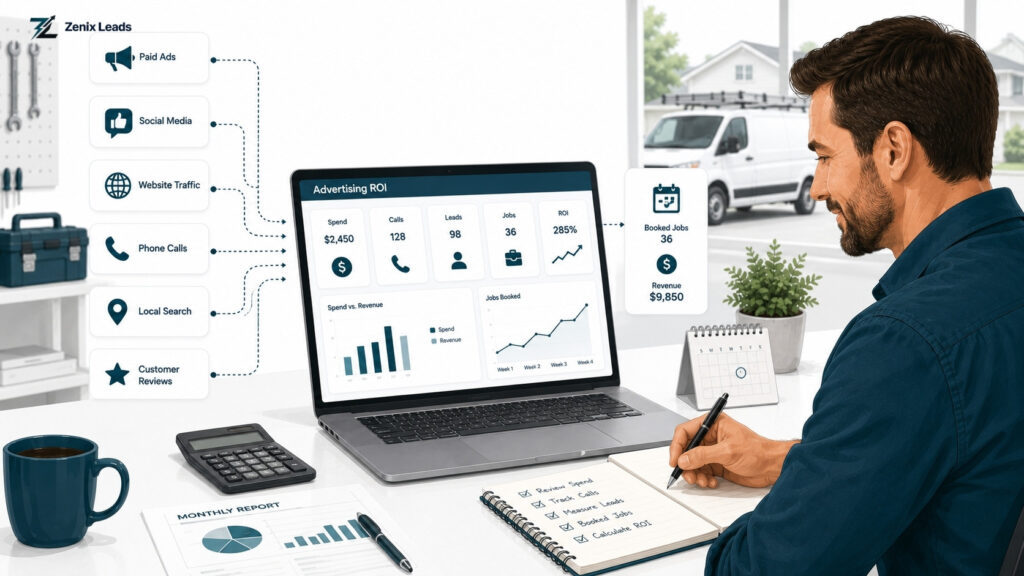
There is no need to buy expensive software to get started A spreadsheet with these columns covers the basics:
-
Channel name (Google Ads / Facebook / Yard Signs / Referrals)
-
Monthly spend
-
Number of leads generated
-
Number of jobs booked
-
Total revenue from those jobs
-
Cost per lead and cost per booked job
Update this monthly. After three to six months patterns will start to emerge that change how you allocate your budget.
Attribution Tracking for Local Business Marketing
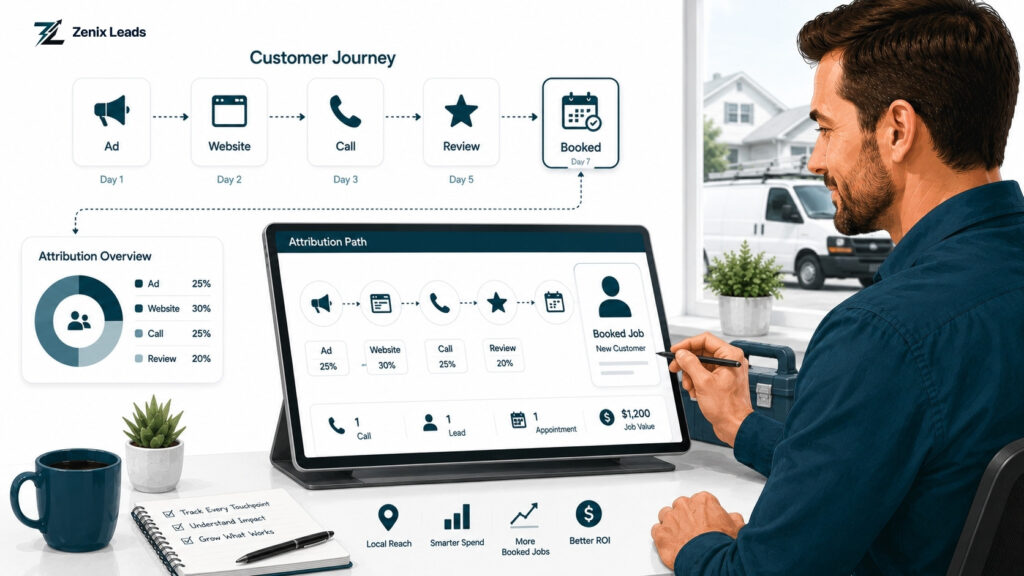
Attribution tracking for local business marketing means understanding which touchpoints deserve credit when a customer decides to hire you.
There are a few common attribution models worth knowing. Each one tells a different story about your marketing performance.
Last Click Attribution
This gives 100 percent of the credit to the last thing a customer interacted with before booking. It is simple but it ignores everything that builds awareness along the way.
First Click Attribution
This credits the very first touchpoint. Useful for understanding which channels introduce new customers to your business. But it ignores what closed the deal.
Linear Attribution
This splits credit evenly across every touchpoint in the customer journey. It is more balanced and works well for businesses running ads across multiple channels at once.
For most local service businesses starting out a combination of call tracking and last click attribution is enough. As you grow you can layer in more sophisticated attribution tracking for local business marketing using tools like Google Analytics 4 or a CRM with built in attribution.
Common ROI Tracking Mistakes Local Contractors Make
Even businesses that want to track ROI often fall into the same traps. The most common ones to avoid:
- Only tracking online leads: Offline channels like referrals and yard signs also cost money and time. Include them.
- Measuring leads instead of revenue: A cheap lead that never converts is not a win. Always tie your data back to actual booked jobs.
- Ignoring seasonality: Don’t compare the slow month of January against the busy month of July. Make comparisons with the previous year.
- Not asking customers how they found you: A simple intake question can help fill in the blanks where digital tracking leaves off.
- Setting it and forgetting it: ROI tracking is not effective unless people review the data and take action on it on a regular basis.
Building a Monthly Marketing ROI Review Habit
Once your tracking is in place the real work begins. Going through your local service marketing ROI each month transforms data into decisions.
Choose 30 minutes at the beginning of each month. Go through your tracking spreadsheet or CRM report.
Here are some questions to ask yourself:
- Which channel brought in the highest average job value?
- Where did I spend money that produced zero or minimal results?
- Are there seasonal trends I should prepare for next month?
Over time this habit will sharpen your instincts. You will stop guessing and start allocating your budget based on what the numbers say.
Final Thoughts
Getting serious about marketing ROI for local service businesses does not require a marketing team or a big budget. It requires consistency.
Start with call tracking. Build a simple spreadsheet. Ask every new customer how they found you. Then review your numbers monthly and adjust.
The contractors who grow steadily are not necessarily the ones spending the most on marketing. They are the ones who know exactly where every dollar is going and what it is bringing back. That starts with learning how to track marketing spend for your home service company the right way.