


Typically, in service businesses, you spend a good amount of money to get the phone to ring. You post ads, claim Google Business profiles, and request reviews from their satisfied customers. However, once the telephone actually rings, a considerable amount of cash goes missing.
Phone lead conversion optimization gets more than just the quick answer. It’s the entire minute from the moment a potential customer calls you until he says yes and book the job.
Between each step lies the opportunity to either gain or lose the customer to another company competing for business.
Why The Phone Still Matters for Local Businesses
What most people don’t realize is that the phone is still alive even though it is rather old today.
In an era dominated by digital forms and chatbots, the telephone remains a potent buying cue for customers.
Once someone takes the phone and calls their private plumber, AC repair company, or cleaning services, they’re frequently prepared to act. They are not just mindlessly surfing.
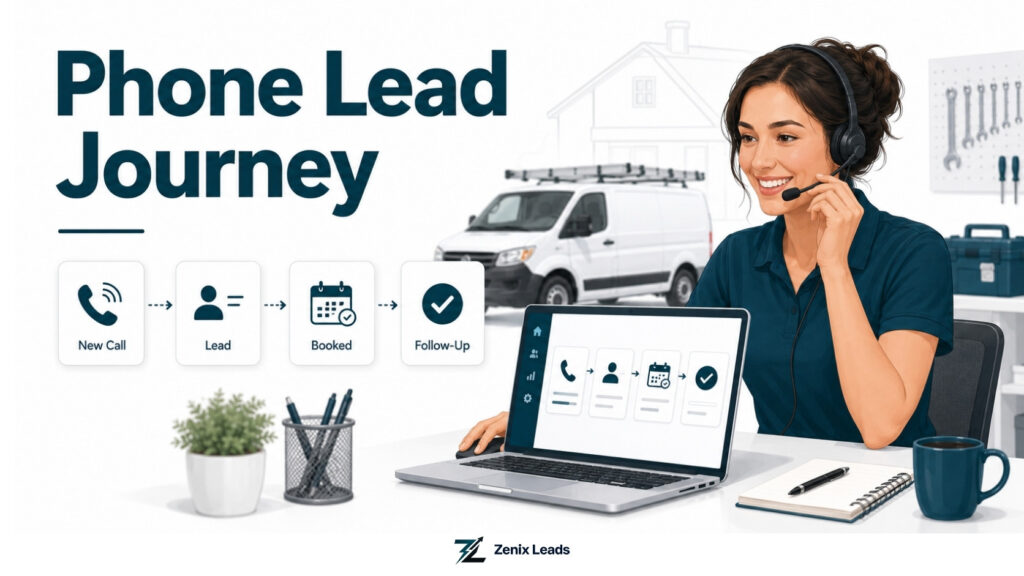
An inbound call to a customer journey local business who have operations in their area might look something like this:
- Customer has a problem or need
- They look for information on the web or in an ad.
- They call you up (high intent action)
- They speak to one of the members of your team
- Either book, or hang up and call someone else
Most companies fall behind when they receive the call and don’t receive the booking, and very few owners monitor it enough to determine exactly where it goes wrong.
The Real Cost of a Missed or Mishandled Call
Each unanswered or mishandled call carries a dollar cost. Consider things that came with that call, advertising efforts, the time, and search efforts. If a customer calls and hangs up without making a reservation, then that time is also wasted.
Typically, calls drop when:
- No responses, no wait times—Customers will step up to the next business on the list without a second thought.
- The lack of trained staff or when a team member seems ill-informed or disinterested erodes trust instantly.
- Unsuccessful calls, calls that end without a “booking attempt,” mean that the call doesn’t tend to convert without one.
- No matter the situation, if you price poorly, that ruins your mood and sets up a bad stale price, and that obviously causes “sticker shock” and hang-ups.
- Bad reach of no follow-up to missed calls. If you call back an hour later, they have already booked around.
First, you need to identify the friction points and then address them, one by one, when it comes to learning how to convert phone inquiries into booked jobs.
Building a Call Experience That Converts
Think quickly and act appropriately
The first few seconds of any call are setting up everything that’s to come. Use a friendly and confident tone with your business name in your greeting to indicate to callers that they have found the right business.
Don’t place callers on hold right away. If you have to, make it short and check back in all the time.
Seek out the following questions early on in the research process.
Never rush into a price. Customers desire to be listened to. Before they even listen to what you have to say, ask them what’s happening:
- What do they have a problem with?
- How long has it been going on?
- Is it causing them to have problems in their life?
This has two effects: It helps establish rapport, and it provides your team with the details needed to get a correct quotation or a helpful recommendation. When people feel understood, they are much more inclined to book.
Invite the Conversation to Book the Day – Activate Effective Listening Skills
A typical error is not throwing the close at the right time. Encourage your staff to actively push the call in the direction of a booking, instead of waiting for the customer to propose (or say, “okay, book it!”).
A quick statement such as, “Based on what you have described, I can get someone out to you Thursday morning or Friday afternoon, which works better for you?” provides a subtle hint to an actual appointment without the pressure or the feeling that you’re being pushy.
Using a service business integration to measure your service business call-to-sale conversion rate.
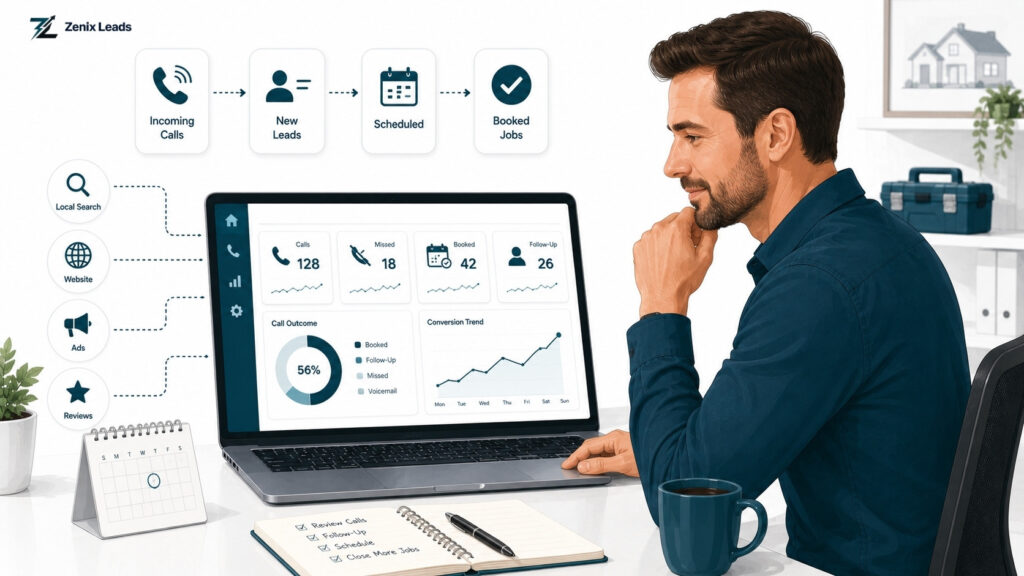
If you don’t measure, you can’t improve. Your service business call-to-sale conversion rate is simply this: Given 10 calls received, how many leads got converted into job bookings?
It’s a simplified track to follow:
- Record all incoming call data, use call-tracking software, or something as simple as a spreadsheet.
- Record booked / not booked / needs follow-up for each call
- Calculate the booked/Total call conversion rate as a percentage.
The rates for most service businesses range from 30-60%. If your own is less than that, then you can do better. If you don’t know your rate at all, that’s a good first step.
Tools That Help
Call tracking software (CallRail or similar) can capture calls and allow you to view which ads are generating calls.
A CRM system will allow you to track, follow up on, and record any lead that rolls out.
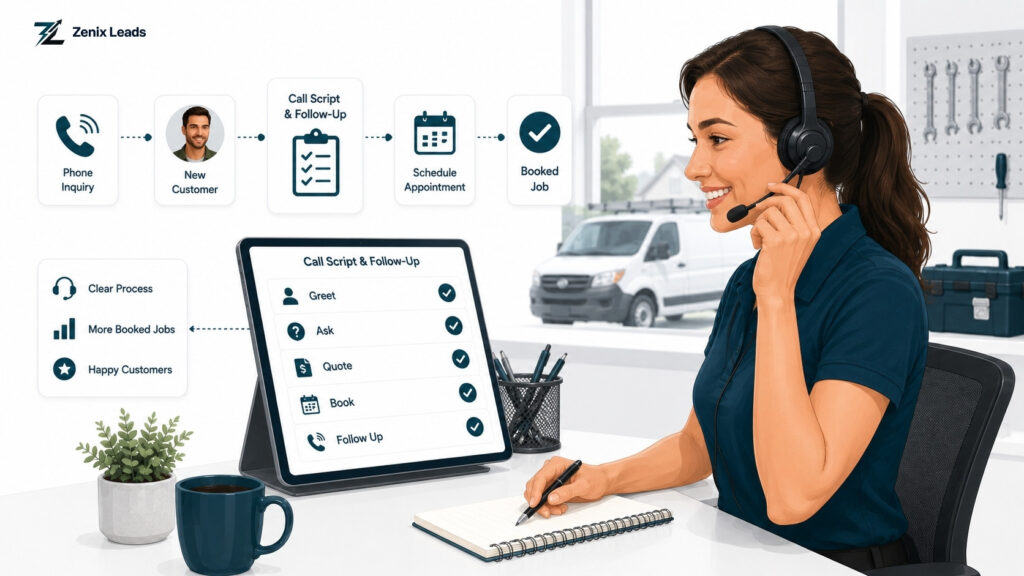
Call scripts and checklists help keep your team uniform on every interaction.
Following Up on Leads That Did Not Book
The service business call to sale conversion rate tells that not all callers book the first time they call. Life gets busy. They’ve called three companies but haven’t made up their minds yet.
A simple follow-up system can retrieve a significant amount of these leads:
- Call back after 10 minutes if not called.
- After a caller requests a quote, but has not committed, send a quick note or email to the caller.
- Reach out after 24 or 48 hours using the same tone, “I usually check in after that much time to find out if anyone had any questions about the quote we discussed”.
Unfortunately, too many companies neglect follow-up, and these leads go cold and end up with a competitor. It can make a distinctive difference to your monthly numbers with a few constructs.
Training Your Team Is Not Optional
Scripts and Systems will only be effective when the team uses them regularly. Call training is one of the biggest ROI investments that a service business can make.
What effective call training is:
Practice by role-playing common scenarios, challenging clients, pricing inquiries, and when customers compare prices.
Analyze actual call recordings to see what is and is not working,
Establish expectations: all members of the team should have a clear understanding of what a successful call will look like and what to do if they have an objection
Even with a few training sessions per month, callers should see improved booking percentages over time.
Assembling: It All Together
Getting from a telephone call to months of waiting to become a confirmed booking is a lot faster and more uncomplicated than many business owners think – but it needs a determined effort at every stage.
Sharps the way your team answers calls, provides guidance and follows up with them, and you see it in income.
There isn’t any kind of magic formula to a strong phone lead conversion optimization, and it’s certainly not about being intense or settling for ingenious tactics and being ready, appearing professional and being able to genuinely help when a contact is made.
That’s what makes them switch from first callers to paying customers, and as one of those customers, eventually recommend you to their neighbor.
The cell phone remains one of the most effective business tools for local service. Don’t neglect to answer every call that comes in.