
You get a new lead. You call back two hours later. They’ve already hired someone else.
This happens every day to service businesses. And it is usually not a lead problem. It is a management problem.
Inbound lead management best practices help you catch, qualify, and convert leads before they go cold. In this guide, you’ll learn how to qualify inbound leads for home services, use the right tools, and stop losing good business to slow responses.
Define Your Ideal Customer Before You Qualify Anyone
Not every lead deserves your time. Some are just browsing. Others are ready to buy today.
Look at your best current clients. What is similar about them? Consider their location, budget, job size, and urgency.
Once you know your ideal customer, spotting a good lead gets easy. Your team stops chasing dead ends. More time goes toward leads that actually close.
This is the first step in every strong inbound lead-management best-practices system.
Use a Lead Qualification Checklist for Your Service Business
Every service business needs a fast, simple way to sort good leads from bad ones. A checklist helps your team do exactly that, every single time.
The BANT Checklist for Home Services
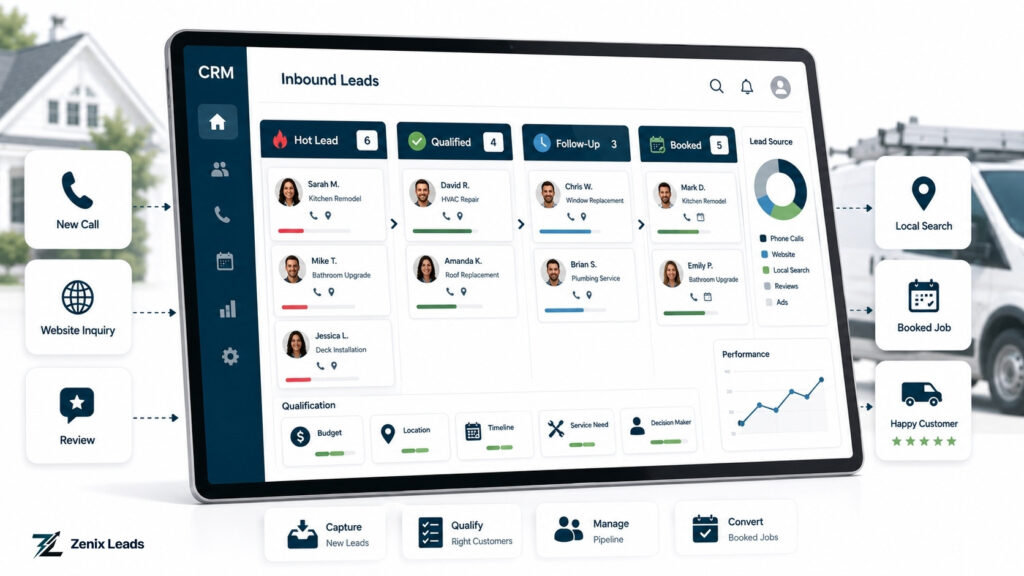
The lead qualification checklist service business pros rely on is based on the BANT method. It covers five key areas every team member should check:
- Budget: The lead can afford your service.
- Authority: The lead is the one who makes the final decision.
- Need: The lead has a clear, real need for what you offer.
- Timeline: The lead has a set timeframe to complete the work.
- Location: The lead is within your service area.
Using this lead qualification checklist service business method keeps your pipeline clean. It stops you from wasting time on leads that will never convert.
How to Qualify Inbound Leads for Home Services at the First Touchpoint
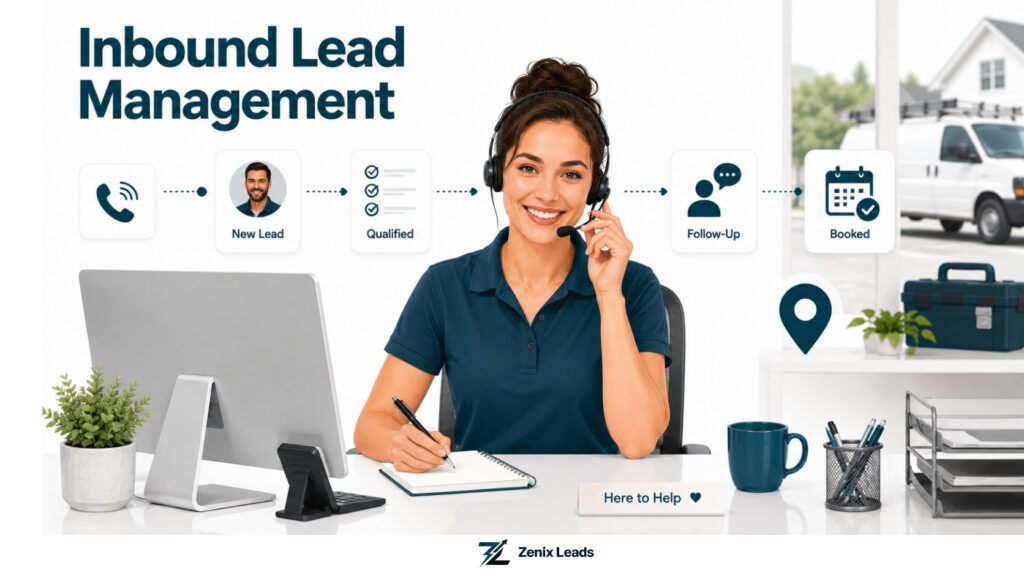
Speed is everything in lead qualification. Responding within five minutes makes you far more likely to win the job.
When someone reaches out, ask the right questions right away. A short intake form on your website does most of the heavy lifting.
Your intake form should collect this key information upfront:
- The type of service they need
- The location of the job
- Their preferred start date
- Their budget range
Understanding the process of qualifying inbound leads for home services begins before ever picking up the phone. Ensure your intake form is configured properly and all leads will qualify themselves for you.
Managing Leads Effectively with a Small Business CRM
A CRM is not just for big companies. Every small service business needs one.
Managing leads effectively in a small business CRM keeps all your lead data in one place. You can see every contact, every follow-up, and every open deal at a glance.
What a good CRM lets you do:
- Score leads so you know who to call first
- Send automatic follow-up reminders
- Route hot leads to the right team member
- Track where every lead sits in your pipeline
Without a CRM, leads fall through the cracks. With one, nothing gets missed.
Use a free or low-cost tool. The key is to use it daily.
Build a Simple Lead Follow-Up System That Never Drops the Ball
Most service businesses lose leads not on the first call but during follow-up. A simple, repeatable system fixes that fast.
The 3 Touch Follow-Up Rule for Service Businesses
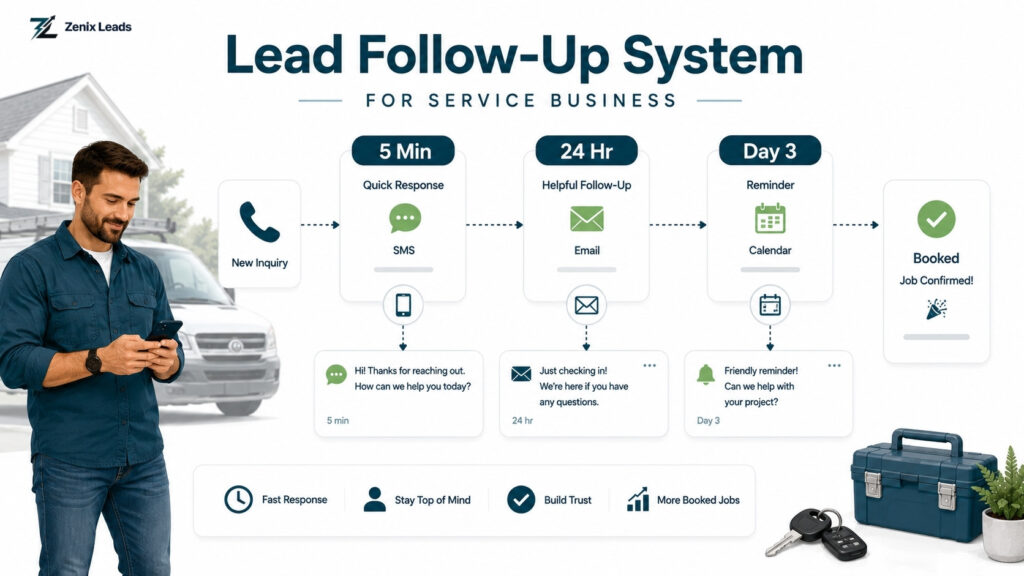
Many leads don’t convert on the first contact. That’s normal. The key is following up the right way, without being pushy. A simple three-step system that works well for home service businesses:
- Touch 1. Respond within 5 minutes: Send a text or call as soon as the lead comes in. First responders win more jobs.
- Touch 2. Follow up within 24 hours: If you did not connect, try again. Use a different channel. Email if you called. Call if you emailed.
- Touch 3. Send a value reminder on Day 3: Share a quick tip, a review, or a simple offer. Keep it short and helpful.
This system is best used when automated within your CRM. It’s set up once and runs every time a new lead comes in.
Qualifying inbound leads for home services is worthless without a strong follow-up. A better lead follow-up system converts better leads to booked jobs without additional team effort.
Align Your Sales and Marketing Teams for a Seamless Lead Handoff
Lack of communication between sales and marketing results in leads falling through the cracks.
Marketing brings leads in. Sales close them. But if both teams define a “good lead” differently, the whole system breaks down fast.
Here’s how to align your teams:
- Agree on what a qualified lead looks like
- Use a shared CRM so both teams see the same data
- Hold a weekly review of lead quality together
- Set clear rules for when a lead moves to sales
This alignment is a core part of inbound lead management best practices. It keeps your pipeline moving without confusion or missed handoffs.
Track These Metrics to Sharpen Your Lead Qualification Strategy
Follow the correct numbers to determine whether your system is functioning. The three metrics that are most important:
- Lead-to-Customer Conversion Rate: This indicates the percentage of leads that turn into paying customers.
- Time to Qualify: The speed at which your team makes a decision whether a lead is worth following up on.
- Lead Source Performance: tells you where your best leads are coming from.
Check these numbers every month. When something falls, determine why and correct it promptly. When your lead-qualification checklist service business process is data-driven, you’re always in a stronger position to make it sharper and better over time.
Conclusion
Managing and qualifying leads doesn’t have to be complicated.
Start with a clear ideal customer. Use a simple checklist. Respond fast. Use a CRM. And keep your teams aligned.
Follow these inbound lead management best practices, and you’ll stop losing leads to slow responses or poor sorting. Pick one step from this guide and start there today.