
Most local service businesses chase volume. More calls. More form fills. More quote requests. But volume alone does not pay the bills. What grows your business is the quality of your leads.
This lead quality guide for local service businesses breaks down exactly what good leads look like and why so many contractors end up wasting time on the wrong ones. If you run a plumbing company, a roofing crew, a landscaping service or any other trade business, this guide is written for you.
Let’s find out how to score your leads and filter out the tire kickers before they drain your team’s time and energy.
What Is Lead Quality and Why Does It Matter
Lead quality is the possibility that a prospect will become a paying customer. A high-quality lead fits your service area, your budget range, and your availability. A low-quality lead wastes your time and costs you money, even when it looks promising at first glance.
Here is why lead quality matters more than quantity for local service businesses:
- Your team spends less time chasing dead ends
- Your close rate goes up without changing your pitch
- Customer satisfaction improves because you serve the right clients
- Your revenue per job increases over time
- You stop competing on price with clients who were never serious
Think of it this way. Fifty bad leads will cost you more than five good ones. The math always works against volume when quality is ignored.
Local Business Lead Qualification Criteria You Should Be Using
Most contractors do not have a formal system for qualifying leads. They answer every call and give every quote the same energy. That approach burns out your team fast.
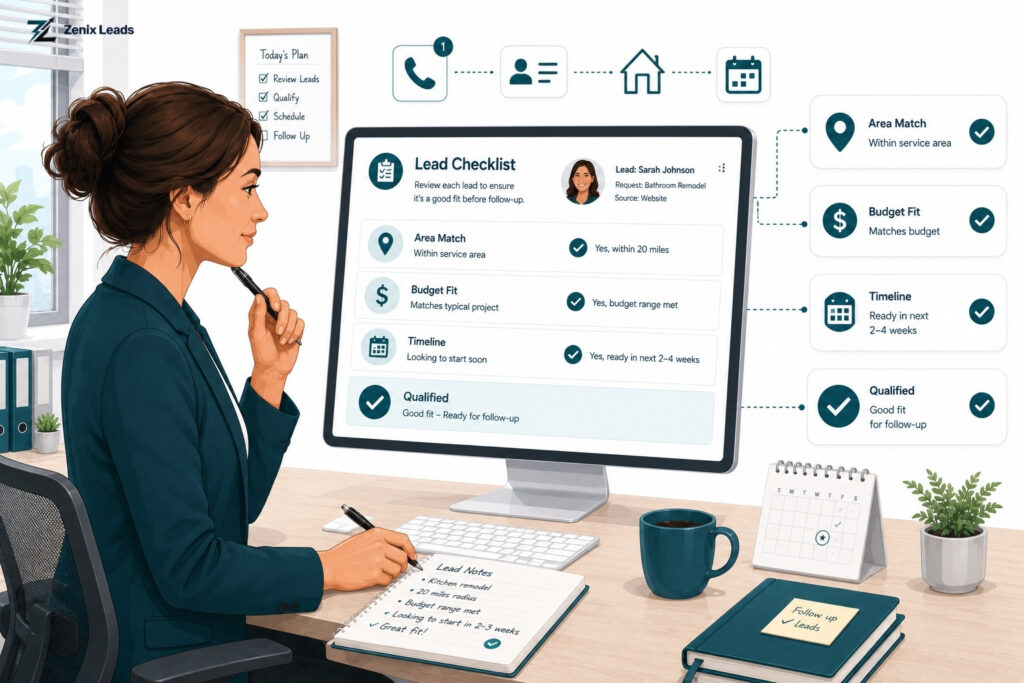
Here are the core local business lead qualification criteria worth building your process around:
Geographic Fit
Does the prospect live or operate within your service area? A lead outside your radius costs you drive time and fuel. Set clear boundaries and stick to them.
Budget Alignment
Can they afford your services? Ask early. A prospect with a $500 budget calling a company that starts at $2000 is not a real lead. It is a time drain.
Project Readiness
Are they ready to move forward soon? Someone planning a job six months out is not a warm lead today. Warm leads have a defined timeline and a real sense of urgency.
Decision Making Authority
Are you speaking to the person who can say yes? Homeowners landlords and property managers all have different approval processes. Know who holds the decision.
Job Scope Match
Does the job fit the type of work you do and do well? A roofing contractor getting calls for gutter cleaning may not benefit from chasing those leads if they fall outside the core offering.
How to Improve Lead Quality for Service Businesses
Improving lead quality is not just about filtering out bad leads after they come in. It starts with how you attract leads in the first place. Here are proven ways to bring in better prospects from the start.
Tighten Your Ad Targeting
If you run Google Ads or Facebook Ads review your targeting settings. Are you showing ads to people outside your service area? Broad targeting brings in low quality traffic. Geo fenced campaigns work far better for local contractors.
Update Your Landing Pages
Your landing page should pre qualify visitors before they fill out a form. Mention your service area, your starting price range and the type of projects you take on. This way people self select in or out before they contact you.
Use Pre Qualification Questions in Your Forms
Add a few simple fields to your contact form. Ask about timeline zip code and project type. This gives you immediate data to qualify a lead before you call them back.
Train Your Team on Intake Calls
Your receptionist or CSR is often the first live contact. Help them to develop the skills to ask the right questions. Two minutes or less using a short intake script to filter out unqualified leads, establishing the budget timeline and location.
Ask for Referrals From Your Best Clients
Referral leads are almost always higher quality. Happy clients refer to people with similar needs, budgets and attitudes. A simple referral request after a completed job costs nothing and often brings in your best new customers.
The Best Lead Scoring System for Contractors
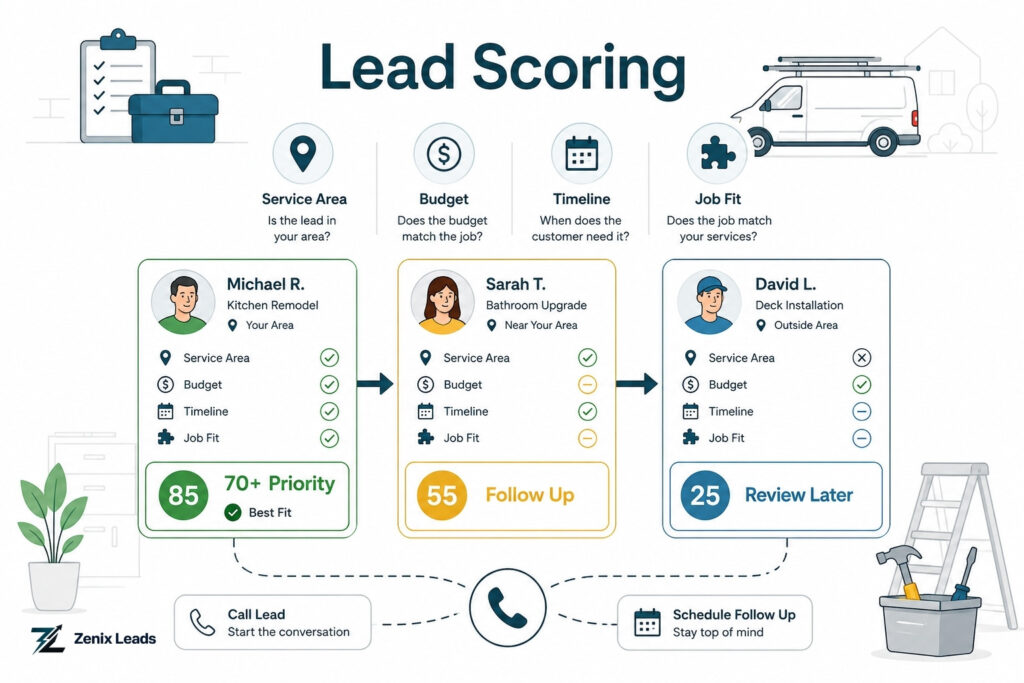
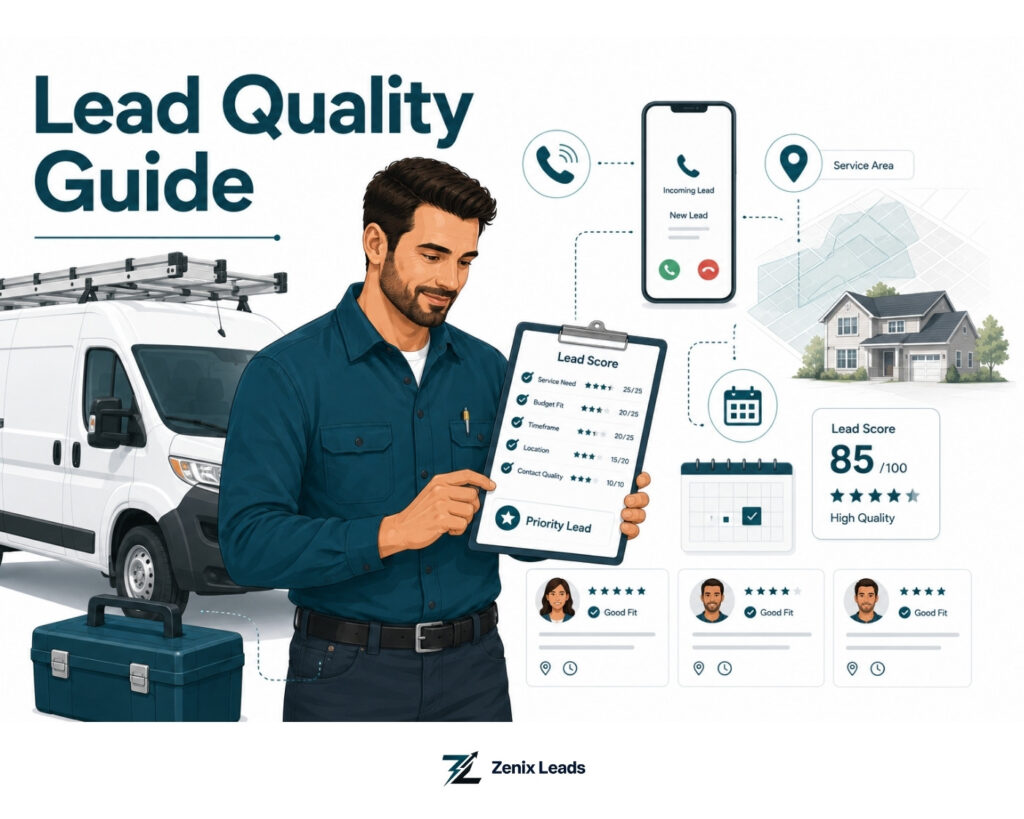
A lead scoring system for contractors does not need to be complicated. At its core it assigns point values to lead attributes. The higher the score the warmer the lead.
A simple framework you can start using this week:
Sample Lead Scoring Criteria
- In service area: +20 points
- Budget matches minimum project size: +20 points
- Wants work done within 30 days: +20 points
- Speaking directly with the decision maker: +15 points
- Job type matches core services: +15 points
- Found you through a referral: +10 points
- Outside service area: subtract 30 points
- No defined budget: subtract 15 points
- Timeline beyond 90 days: subtract 10 points
Leads with scores of seventy or higher should be called back on the same day. Leads 40-70 lead to the follow up sequence. Leads under 40 are acceptable, but can be deprioritized or declined politely.
The exact numbers are less important than the habit of scoring. Once your team gets used to evaluating leads this way the whole intake process gets faster and smarter.
Common Signs of a Low Quality Lead
Spotting a low quality lead early saves you hours. Watch for these red flags during intake:
- They cannot give a clear timeline or keep changing it
- They are shopping 10 different companies for the lowest price
- They push back on every standard part of your process
- The project scope keeps expanding without budget discussion
- They mention a previous contractor left the job unfinished
- They want a verbal quote with no site visit needed
None of these signals mean you should never take the job. But they do mean you should ask more questions before committing your team’s time.